
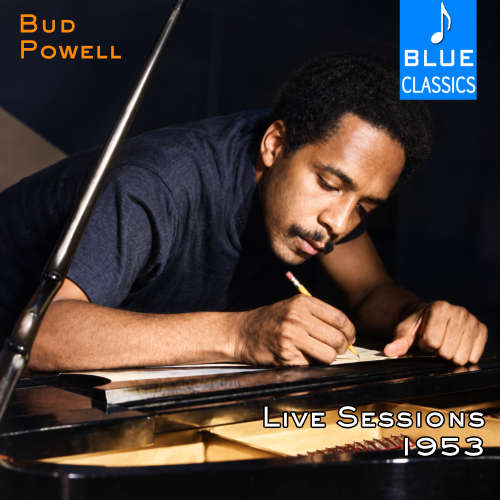
 Live Sessions 1953
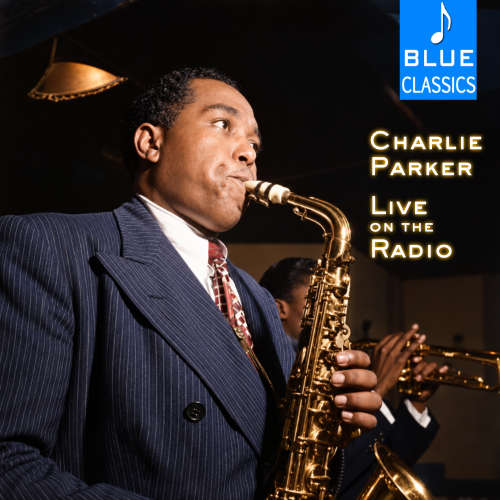 Live on the Radio

Bud Powell - pianist
Bud Powell (b. September 27, 1924 – d. July 31, 1966) was an American jazz pianist and one of the central figures in the development of bebop. His playing transformed the role of the piano in modern jazz, particularly through his adaptation of the melodic and rhythmic language of Charlie Parker to the keyboard. Powell's recordings of the late 1940s and early 1950s became important reference points for later generations of jazz pianists.Powell was born September 27, 1924, in New York City, into a musical family. His father, William Powell, was a stride pianist, and music was therefore present in the household from an early age. Powell initially studied classical piano and later became increasingly interested in jazz. His early influences included Fats Waller, Art Tatum, James P. Johnson, and other pianists of the Harlem tradition. At the same time, he was exposed to the new harmonic and rhythmic ideas that were emerging in New York during the early 1940s.
As a teenager, Powell became part of the musical world around Minton's Playhouse, the Harlem club associated with the development of bebop. There he became a close friend of Thelonious Monk, who was several years older and became an important influence and supporter. Powell was among the musicians who participated in the jam-session culture in which the new language of bebop was developing.
Powell's first professional work came before he was twenty. In 1943–44, he played with Cootie Williams's orchestra, and his first commercial recordings were made with Williams in New York in January 1944, when Powell was only 19. The sessions included “You Talk a Little Trash,” “Floogie Boo,” “I Don't Know,” “Gotta Do Some War Work, Baby,” “My Old Flame,” “Sweet Lorraine,” “Echoes of Harlem,” and “Honeysuckle Rose.”
Although Cootie Williams's ensemble belonged primarily to the swing tradition, Powell's playing already showed characteristics that pointed toward bebop. His approach to harmony and melodic improvisation differed from the older stride-based piano tradition. The recordings also document his presence alongside musicians such as Eddie “Cleanhead” Vinson, Eddie “Lockjaw” Davis, and Cootie Williams.
Powell's early career was interrupted by serious health problems. In 1944 he was beaten by police during an incident outside a club in Harlem. He suffered a head injury from which he never fully recovered. The incident was followed by headaches and periods of mental illness that would affect his life and career for the remainder of his life. He was subsequently hospitalized and subjected to psychiatric treatment, including electroconvulsive therapy.
Despite these difficulties, Powell returned to music and became increasingly involved with the musicians shaping bebop. In 1946, he recorded with Dexter Gordon, Sarah Vaughan and Tadd Dameron, J. J. Johnson, Sonny Stitt, Kenny Dorham and others. These sessions show him working in several different settings, from vocal and ensemble recordings to small bebop groups.
A decisive stage in Powell's recording career began in 1947, when he started recording regularly as a leader. On January 10, 1947, he recorded his first session as leader of his own trio in New York. The repertoire included performances associated with the emerging bebop style, and his playing showed the developing piano language for which he would become known.
Powell's conception of the piano differed from the approach of many earlier jazz pianists. He reduced the role of the left hand, often using it to state chords rather than maintaining the continuous stride patterns of earlier pianists. The right hand could then develop long, rapid single-note lines, frequently extending ideas associated with Charlie Parker's saxophone playing. Blue Note describes this as one of Powell's central contributions to post-swing pianism.
Powell's relationship with Parker was musically significant. Parker's approach to melodic improvisation offered Powell a model that could be transferred to the piano, while Powell developed his own harmonic and rhythmic solutions on the keyboard. Powell was not simply imitating Parker; he helped establish a specifically pianistic form of bebop. His recordings made the piano a much more direct vehicle for the fast, linear improvisational language associated with the new style.
His close friendship with Thelonious Monk was also important. Monk encouraged Powell's musical development and was among the musicians who recognized his ability at an early stage. The relationship between the two pianists was part of the musical network that surrounded early bebop in New York.
In 1947 and 1948, Powell continued to record as a leader and sideman, while also appearing in the clubs of New York. His recordings for Roost and other labels became important documents of the emerging bebop style. He also participated in the Royal Roost radio broadcasts. On December 19, 1948, he performed in a Royal Roost broadcast with an all-star group that included Benny Harris, J. J. Johnson, Buddy DeFranco, Lee Konitz, Budd Johnson, Cecil Payne, Chuck Wayne, Nelson Boyd, and Max Roach.
These broadcasts reveal another aspect of the New York jazz scene of the period. The new bebop musicians were not confined to commercial studio recordings; they were also heard through radio broadcasts from clubs such as the Royal Roost. Powell's participation placed him among the musicians at the centre of this rapidly developing musical movement.
The year 1949 was particularly important in Powell's recording career. He began recording for Blue Note, producing sessions that became central to his discography. Blue Note's The Amazing Bud Powell material came from sessions on August 8, 1949 and May 1, 1951, recorded at WOR Studios in New York. The original material was first issued on 78 rpm singles before being assembled into LP formats. Among the compositions associated with these recordings are “Bouncing with Bud,” “Un Poco Loco,” “Dance of the Infidels,” “Hallucinations” (also known as “Budo”), and “Tempus Fugit.”
Powell's work during this period coincided with the establishment of bebop as a major style. Yet his career was increasingly affected by his health. He experienced recurring periods of hospitalization and psychological instability, while alcohol and the consequences of his earlier injuries further affected his physical condition. His professional life consequently became less consistent than his artistic importance might suggest.
At the same time, his musical reputation among fellow musicians remained strong. Powell was regarded as a major pianist by artists who had been involved in bebop from its beginnings, and his recordings became part of the working vocabulary of later pianists. His influence can be traced through players who adopted his right-hand linear approach, sparse left-hand accompaniment, and harmonic treatment of standard song forms.
Powell's recording career continued into the 1950s on several labels, including Blue Note, Clef, Norgran, Verve, and others. His later recordings included both studio sessions and live or broadcast performances. Although his health increasingly limited his activity, he continued to produce significant recordings, and his playing retained its individual character.
Powell spent several years in Paris, where he lived during the late 1950s. The move to Europe provided a different environment from the New York jazz scene in which he had developed. He performed and recorded there, while also maintaining connections with American musicians visiting Europe. His life in Paris became closely associated with the support of Francis Paudras, who later wrote extensively about their friendship and Powell's final years.
Powell eventually returned to the United States. In 1964, after several years in Europe, he appeared at Birdland in New York, where some of his final performances were recorded. His official biography notes that his last recordings were made in 1964.
By this stage, however, Powell's health had deteriorated substantially. Years of physical and psychological illness, alcoholism and repeated institutional treatment had taken a serious toll. Nevertheless, he continued to be recognized by musicians as a major figure in the history of jazz piano.
Bud Powell died on July 31, 1966, in New York City, at the age of 41. His career had lasted just over twenty years, beginning with the Cootie Williams recordings of 1944 and ending with his final performances and recordings in the 1960s.
Powell's importance rests not only on the number of recordings he made, but on the specific change he brought to jazz piano. He translated the linear, horn-like melodic language of bebop to the keyboard while reducing the role of the traditional stride left hand. His influence can be heard in the playing of Thelonious Monk, Al Haig, Hampton Hawes, Bill Evans, McCoy Tyner, and numerous later pianists, even though each developed in very different directions.
His recordings from the late 1940s and early 1950s remain the clearest documents of his principal creative period. They capture Powell during the years when bebop was moving from an experimental language within New York's clubs to an established part of modern jazz. Through these recordings, his approach to melody, harmony, rhythm and piano technique became available to musicians far beyond the places where he had originally performed.
Powell's personal circumstances were complex, and much has been written about the connection between his illness and his musical career. Yet the recordings themselves provide a more direct account of his musicianship. They reveal a pianist with a distinctive conception of rhythm and harmony, a strong sense of melodic line, and an ability to transform the harmonic structures of standard repertoire into new material through improvisation. His work remains closely associated with the formation of bebop and with the development of modern jazz piano.